Political & Public Service Kandam
What Is Political & Public Service Kandam?
The Political & Public Service Kandam (Rajya Kandam) is addressed to community leaders, public servants, politicians, diplomats, and social visionaries. It details your prospects in public life, electoral politics, governance, institutional authority, societal honors, and how to harness your influence for the righteous upliftment of society.
Book Political & Public Service Kandam
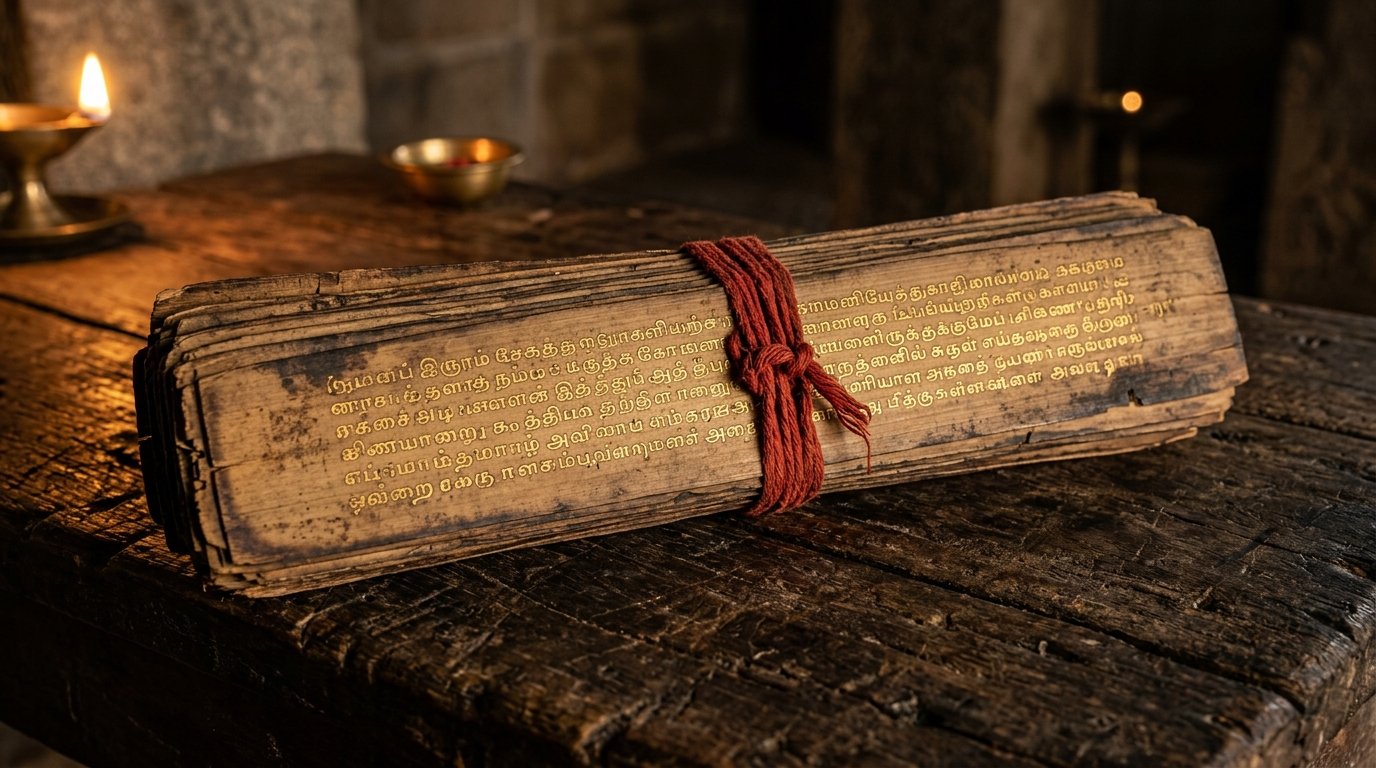
Direct reading from sacred palm leaves at Vaitheeswaran Koil with complete audio/video explanation.
Why Choose Us
Authentic Vaitheeswaran Koil traditions preserved across generations by Guruji A. Siva Guru Swamy.
Centuries of Lineage
Hereditary readers at Vaitheeswaran Koil preserving ancient Tamil poetic palm leaves.
Thumbprint Search
Your sacred leaf bundle is located strictly through your unique thumb impression.
Direct Guruji Guidance
Personal interpretation and clear explanation by Guruji A. Siva Guru Swamy.
Worldwide Delivery
Complete recording and translated explanation delivered privately worldwide.
Benefits of Political & Public Service Kandam
Key spiritual and practical transformations revealed through this sacred chapter.
Public Office Prospects
Discover the divine timing and planetary windows for entering public service and governance.
Leadership Authority & Honor
Enhance administrative charisma, public trust, and high community standing through righteous action.
Electoral Strategy Guidance
Foresight on public campaigns, institutional alliances, and overcoming formidable political rivals.
Righteous Legacy Building
Leave an enduring, honorable mark on society through benevolent public welfare contributions.
Our Nadi Reading Process
Four traditional stages to trace your authentic palm leaf and receive divine guidance.
Submit Thumbprint
Right thumb for men; left thumb for women along with date of birth.
Palm-Leaf Search
Readers classify thumb impressions and search ancient bundles at Vaitheeswaran Koil.
Index Verification
Verses verified with simple Yes/No answers until your unique leaf is matched.
Translation & Delivery
Verses recorded and delivered with clear translation in your preferred language.
Explore All 18 Sacred Kandams
Navigate seamlessly through any chapter inscribed by the ancient sages at Vaitheeswaran Koil.