
Nadi History
The Origin of Nadi Astrology
The word Nadi is commonly understood as a “channel” or “flow,” symbolizing the connection between divine knowledge and an individual’s life journey.
Nadi tradition associates these manuscripts with revered Rishis and Siddhars such as Agasthya, Siva Vakkiyar, Vasistha, Bhrigu, Bogar and others. These spiritual masters are believed to have possessed extraordinary insight into human nature, karma and the unfolding of time.
Rather than offering one general prediction for everyone, the Nadi system is based on the belief that specific records were prepared for individuals destined to seek them at an appropriate moment in their lives.
While the precise age and authorship of individual manuscripts cannot always be historically verified, their significance remains deeply connected to Tamil spiritual, literary and manuscript traditions.

Palm-Leaf Manuscripts
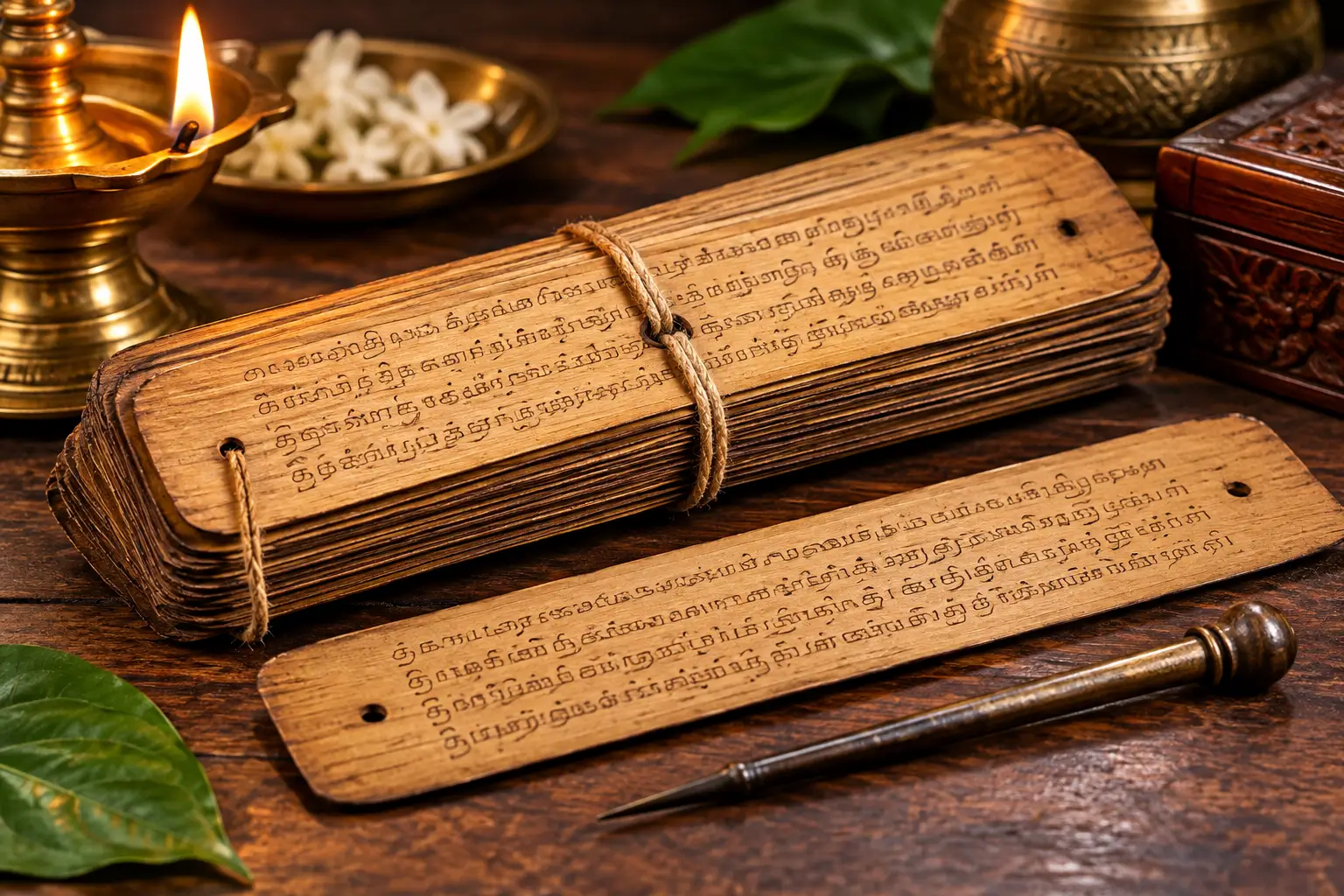
Before paper became widely available, palm leaves were commonly used as writing material throughout South India. Mature leaves were collected, prepared, dried and carefully cut into narrow sections. The text was then inscribed with a pointed metal stylus and darkened using natural substances so that the writing became visible.
Small holes were made in the leaves, allowing them to be tied together and arranged into manuscript bundles. Each collection could contain writings relating to astrology, philosophy, medicine, spirituality, literature and other branches of traditional knowledge.
Because palm leaves naturally deteriorate over time, manuscripts had to be periodically recopied by skilled scribes. This process allowed important teachings to survive through successive generations, although the physical leaves available today may be later copies of much older texts.
In Nadi Astrology, manuscripts are traditionally organized into bundles and chapters known as Kandams. Each Kandam addresses a particular area of life, including family, education, marriage, children, health, profession, prosperity, travel and spiritual development.
Nadi Astrology and Tamil Heritage
Nadi Astrology forms part of Tamil Nadu’s wider heritage of palm-leaf scholarship. Tamil manuscript traditions preserved knowledge relating to Siddha medicine, astronomy, astrology, yoga, philosophy, temple practices and classical literature.
Vaitheeswaran Koil became one of the most prominent centres associated with Nadi Jyothidam. The sacred town is home to the historic Vaitheeswaran Temple, dedicated to Lord Shiva as Vaidyanatha—the divine healer.
Over time, families of trained readers settled in and around the region. They preserved manuscript collections and developed specialized knowledge for classifying thumb impressions, locating possible leaf bundles, reading ancient scripts and interpreting their contents.
The connection between the manuscripts, the Siddhar tradition and the sacred landscape of Tamil Nadu gives Nadi Astrology its distinctive cultural and spiritual identity.

Nadi Astrology Through the Generations
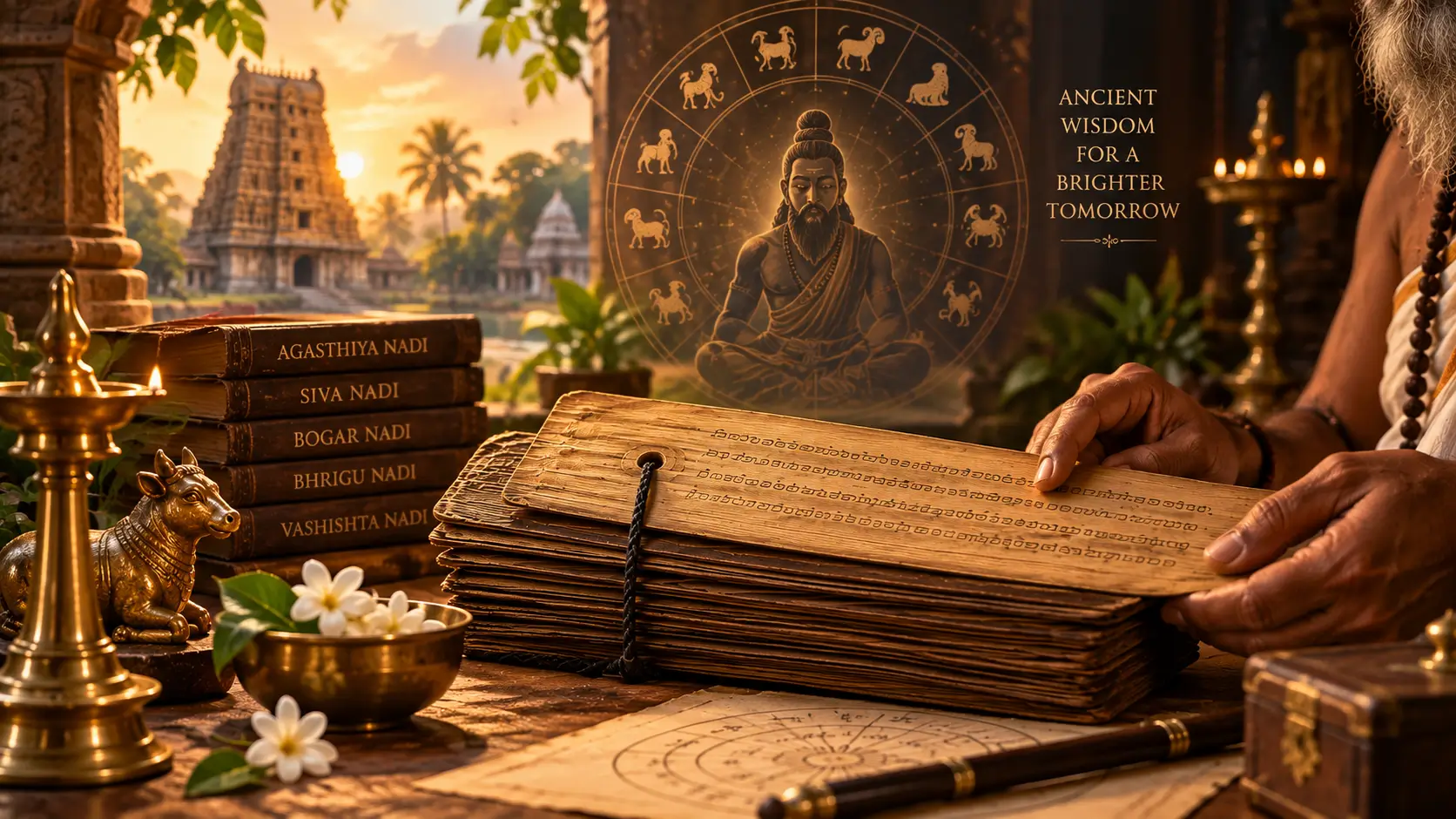
The knowledge required to practise Nadi Astrology has traditionally been passed down through families of experienced readers. Learning the practice involves more than reading a manuscript. It requires familiarity with traditional scripts, astrological terminology, manuscript classification, verification methods and the responsible communication of sensitive guidance.
Each generation has played a part in protecting the manuscripts and preserving the methods used to identify and interpret them.

Preservation of Nadi Astrology
Preserving palm-leaf manuscripts requires constant care. The leaves must be protected from moisture, heat, insects, dust and physical damage. Traditional custodians carefully clean, organize and store the bundles to extend their life.
Transcription, translation and digitization now provide additional ways to safeguard their contents. However, preserving the tradition also requires training knowledgeable readers who can understand the scripts, context and methods of interpretation.