
Navagraha
The Nine Divine Planetary Influences in Vedic Astrology
In Vedic astrology (Jyotisha) and ancient Tamil spiritual heritage, the Navagrahas represent the nine cosmic energy centers that govern the rhythms of existence, individual karma, and spiritual evolution. Derived from the Sanskrit words Nava (nine) and Graha (cosmic force or influencer that shapes conscious experience), each celestial body presides over distinct dimensions of human life—including vitality, intellect, prosperity, relationships, courage, longevity, and ultimate spiritual liberation.
The venerable Siddhas and Rishis who inscribed the Nadi palm leaves understood the profound metaphysical resonance between planetary transits and human destiny. When challenging planetary placements create obstacles in life, visiting the designated sacred sthalams and performing authentic Vedic remedial rituals brings harmony, clears karmic burdens, and invites auspicious blessings.
The Nine Navagraha Planets
Explore the primary spiritual attributes, governing domains, and significance of each sacred planet in the Vedic cosmos.
Surya represents the cosmic soul (Atmakaraka), vitality, leadership, authority, fatherly lineage, and moral willpower. Worship of Surya instills clarity of purpose, noble character, administrative brilliance, and enduring physical stamina.
Chandra governs the mind (Manas), emotional tranquility, subconscious awareness, motherhood, and mental peace. Reverence to Chandra fosters psychological equilibrium, deep intuition, graceful empathy, and inner serenity.
Angaraka (Sevvai) represents courage, drive, landed property, valor, and executive determination. Traditional propitiation mitigates Manglik doshas, removes debt, and transforms passionate energy into focused bravery.
Budha presides over discernment (Buddhi), trade, communication, mathematics, education, and analytical speech. Devotees invoke Budha for scholastic triumphs, analytical clarity, commercial acumen, and eloquent articulation.
Guru (Brihaspati) is the divine preceptor bestowing spiritual illumination, progeny, righteous wealth, philosophical wisdom, and divine protection. Favorable Guru grace mitigates affliction and opens doorways to abundance and honor.
Shukra governs conjugal bliss, aesthetic appreciation, refined arts, luxury, marital harmony, and prosperity. Worship of Shukra invokes marital compatibility, creative talent, graceful diplomacy, and worldly contentment.
Shani represents discipline, responsibility, patience, karma, and perseverance. Traditional worship focuses on developing humility, overcoming trials, and cultivating profound spiritual maturity and inner endurance.
Rahu is associated in Vedic astrology with ambition, transformation, foreign journeys, and worldly desires. Traditional temple pariharams are performed for spiritual balance, mental clarity, and overcoming unexpected obstacles.
Ketu symbolizes detachment, esoteric spiritual knowledge, intuition, healing, and liberation (Moksha). Devotees seek Ketu blessings for profound spiritual awakening, freedom from cycles of attachment, and inner peace.
Navagraha Temples in Tamil Nadu
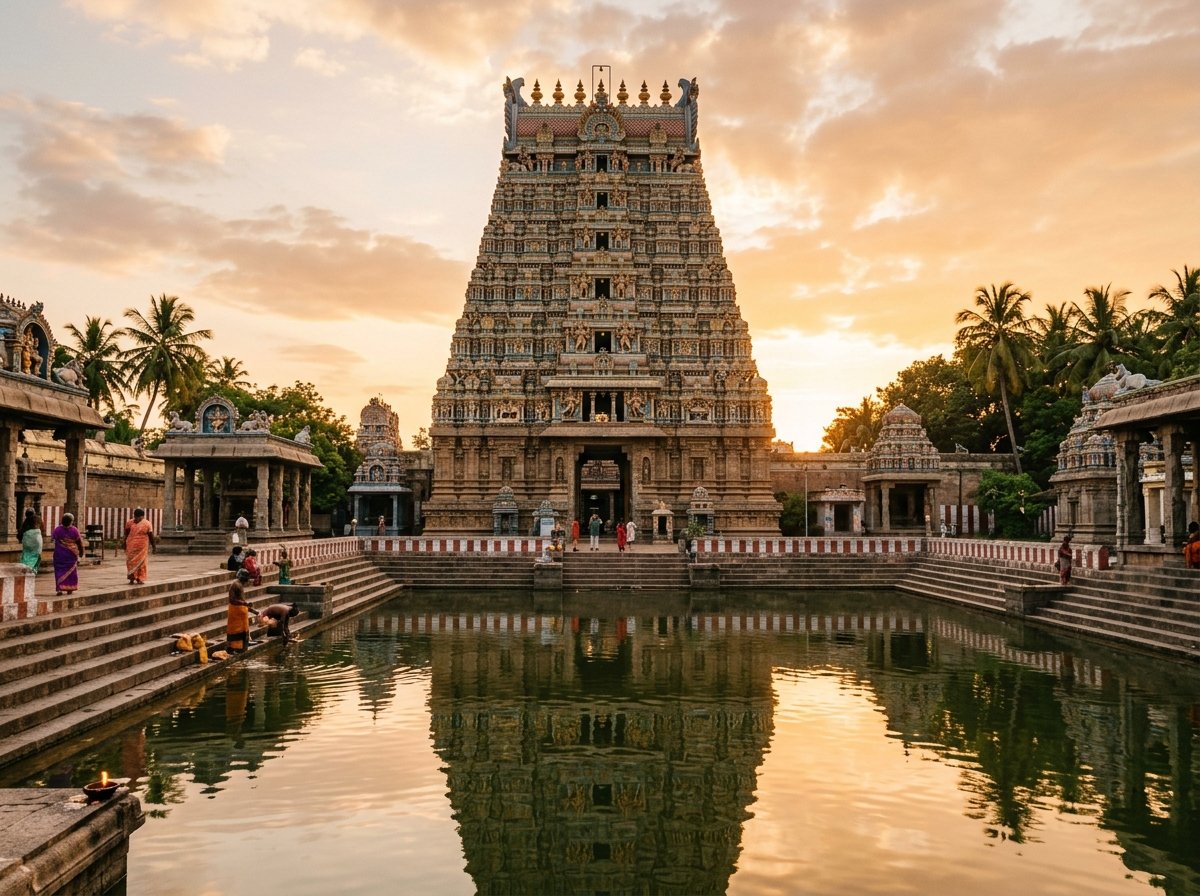
Tamil Nadu is home to a revered cluster of nine ancient Navagraha temples situated in the Chola heritage region around Kumbakonam, Mayiladuthurai, and Sirkali. Each sthalam is dedicated to a distinct planetary deity.
| Planet | Presiding Deity | Traditional Sthalam / Temple Name | Location & Region |
|---|---|---|---|
| ☀️ Surya (Sun) | Suriyanar | Suryanar Koil | Near Aduthurai, Kumbakonam |
| 🌙 Chandra (Moon) | Kailasanathar | Kailasanathar Temple | Thingalur, near Thiruvaiyaru |
| 🔴 Angaraka (Mars) | Vaidyanathar / Sevvai | Sri Vaitheeswaran Koil | Vaitheeswaran Koil, Sirkali |
| 🟢 Budha (Mercury) | Swetharanyeswarar | Swetharanyeswarar Temple | Thiruvenkadu, near Sirkali |
| 🟡 Guru (Jupiter) | Apatsahayeswarar | Apatsahayeswarar Temple | Alangudi, near Kumbakonam |
| ⚪ Shukra (Venus) | Agneeswarar | Agneeswarar Temple | Kanjanur, near Kumbakonam |
| ⚫ Shani (Saturn) | Dharbaranyeswarar | Dharbaranyeswarar Temple | Thirunallar, Karaikal |
| ☊ Rahu (North Node) | Naganathaswamy | Rahu Sthalam Temple | Thirunageswaram, near Kumbakonam |
| ☋ Ketu (South Node) | Naganathaswamy | Ketu Sthalam Temple | Keezhperumpallam, near Poompuhar |
Why Visit Navagraha Temples & Perform Pariharam?
Vedic pariharam rituals performed at the consecrated sthalams help dissolve karmic blockages, cultivate peace of mind, and align your life energy with cosmic favor.
Planetary Dosha Nivarthi & Karmic Relief
During challenging astrological periods such as Sade Sati (7.5 years of Saturn), Ashtama Shani, Rahu-Ketu transits, or afflicted planetary Dasa-Bhukti phases, traditional worship at Navagraha shrines creates energetic shielding. Performing Archana, Ghee lamp lighting, and sacred offerings mitigates planetary afflictions and grants inner resilience to navigate tests.
Health, Healing & Life Vitality
Planetary energies govern different organ systems, vitality, and emotional stamina. Visiting temples such as Sri Vaitheeswaran Koil (where Lord Shiva is worshipped as Sri Vaidyanathar, the divine physician) and Suryanar Koil rejuvenates bodily vigor, dissolves stress patterns, and supports long-term physical and mental wellness.
Plan Your Navagraha Temple Pilgrimage Tour
A well-organized temple itinerary ensures peaceful darshan, timely pooja participation, and smooth travel across the sacred Kaveri delta.
1-Day Quick Tour
Designed for devotees with limited time. Focuses on the primary core temples around Kumbakonam and Vaitheeswaran Koil starting early morning, scheduled around peak temple darshan and abhishekam timings.
2-Day Complete Circuit
The ideal circuit allowing serene darshan across all nine planetary sthalams without haste. Provides adequate time for personalized archana, pariharam poojas, and visiting historic Chola heritage monuments.
Nadi & Temple Guidance
Seamlessly combine your authentic Nadi palm-leaf reading at Vaitheeswaran Koil with guided visits to your specific remedy temples as prescribed in your ancient Tamil palm-leaf chapter.